
Where should a porta potty go on a job site?
Pick level ground first. ADA Standards section 302.1 requires stable, firm, slip resistant surfaces, and that rule matters even for standard units because a soft or sloped pad shortens the life of the unit and makes servicing harder. Fontana Porta Pros checks for compacted gravel, asphalt or concrete before setting anything down. Leave a straight path for the pump truck, since construction site services crews often need units close to the work but out of the way of moving equipment. Keep units away from storm drains and low spots that flood in a hard rain. If you're placing an ADA accessible porta potty, the unit needs a 60 inch turning circle per ADA Standards section 304.3.1, plus a door opening of at least 32 inches under section 404.2.3. Fontana sites with tight lot lines, especially near Bloomington 7.0 miles southeast, should plan the accessible unit's pad first and build the rest of the layout around it. Route access matters for standard porta potty rental too, since a service truck can't top off a tank it can't reach.
Do I need a permit for dumpster or porta potty placement in Fontana?
Placement in the public right of way needs confirming with the city, since permit rules were not verified for this page. If a dumpster or unit sits on a sidewalk, street or city easement rather than private property, check with Fontana before delivery day. A dumpster placement permit cost and process varies by jurisdiction, and guessing at a fee here would do you no favors. The safer move on any roll-off dumpster rental or temporary fence rental job is to keep everything on private property when you can, which sidesteps the permit question entirely. A roll-off delivery needs about 60 feet of straight clearance behind the truck, so measure your driveway or lot before the truck shows up. Renters bringing in a 10 yard dumpster rental for a driveway cleanout usually have room to spare; a 40 yard dumpster rental for new construction often doesn't, especially on narrow infill lots.
How many units do I need and where should they cluster?
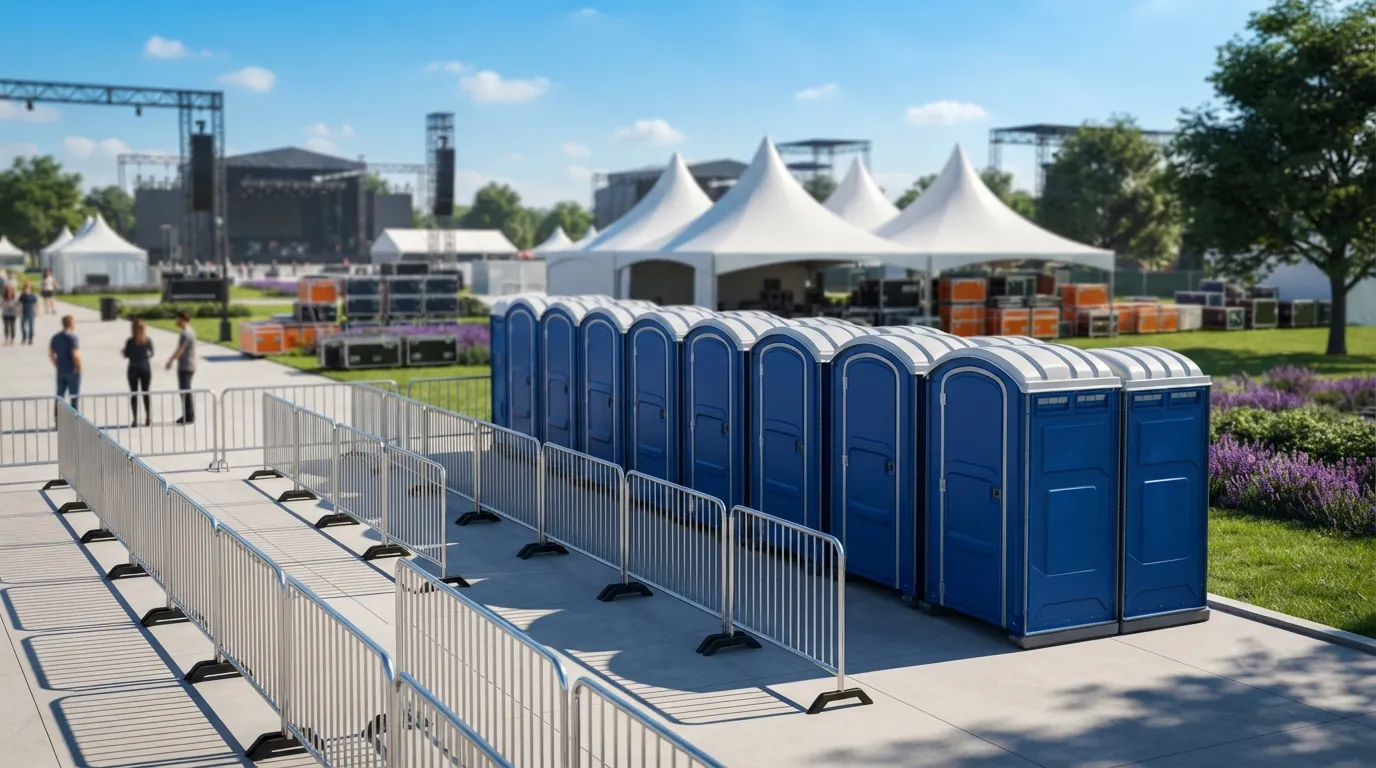
Worker count drives the number, not guesswork. OSHA 1926.51(c) sets the ratio for construction sites at one toilet for 20 workers or fewer, then one toilet and one urinal per 40 workers as the crew grows past that, and one per 50 once you're at 200 or more. For guidance on running the numbers for your Fontana crew, see how many porta potties do I need and the fuller breakdown at OSHA portable toilet requirements. When you're clustering several standard units together, ADA Standards section 213.2 requires at least 5 percent of the cluster to be accessible, and never fewer than one unit, so a bank of ten needs at least one ADA-compliant stall in the mix. Space units with a clear path of at least 36 inches between them and any obstruction, matching the accessible route width in ADA Standards section 403.5.1. Agricultural operations fall under a different rule: OSHA 1928.110 calls for one facility per 20 hand-labor employees, reachable within a quarter mile walk, which matters for farm and agricultural restrooms work around Fontana's outer parcels.
What else needs planning around a portable unit?
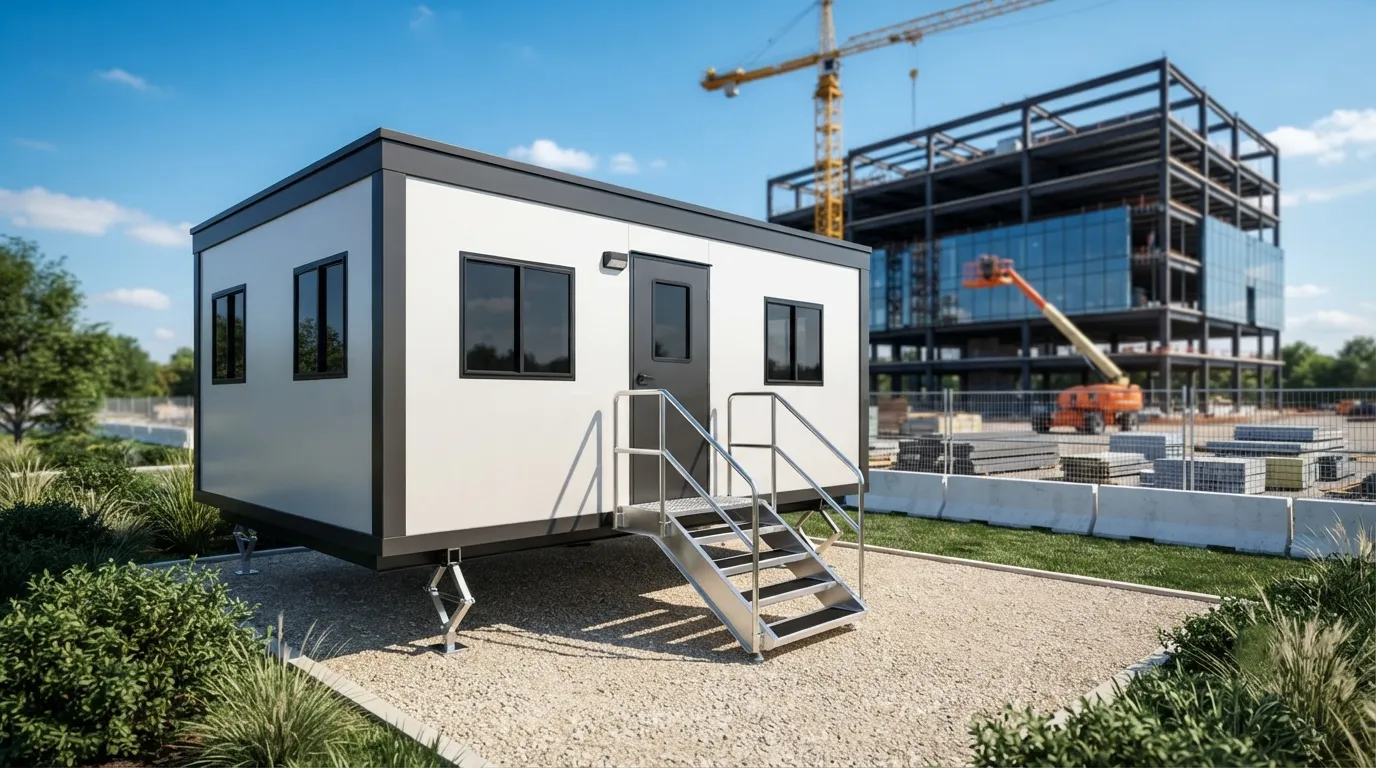
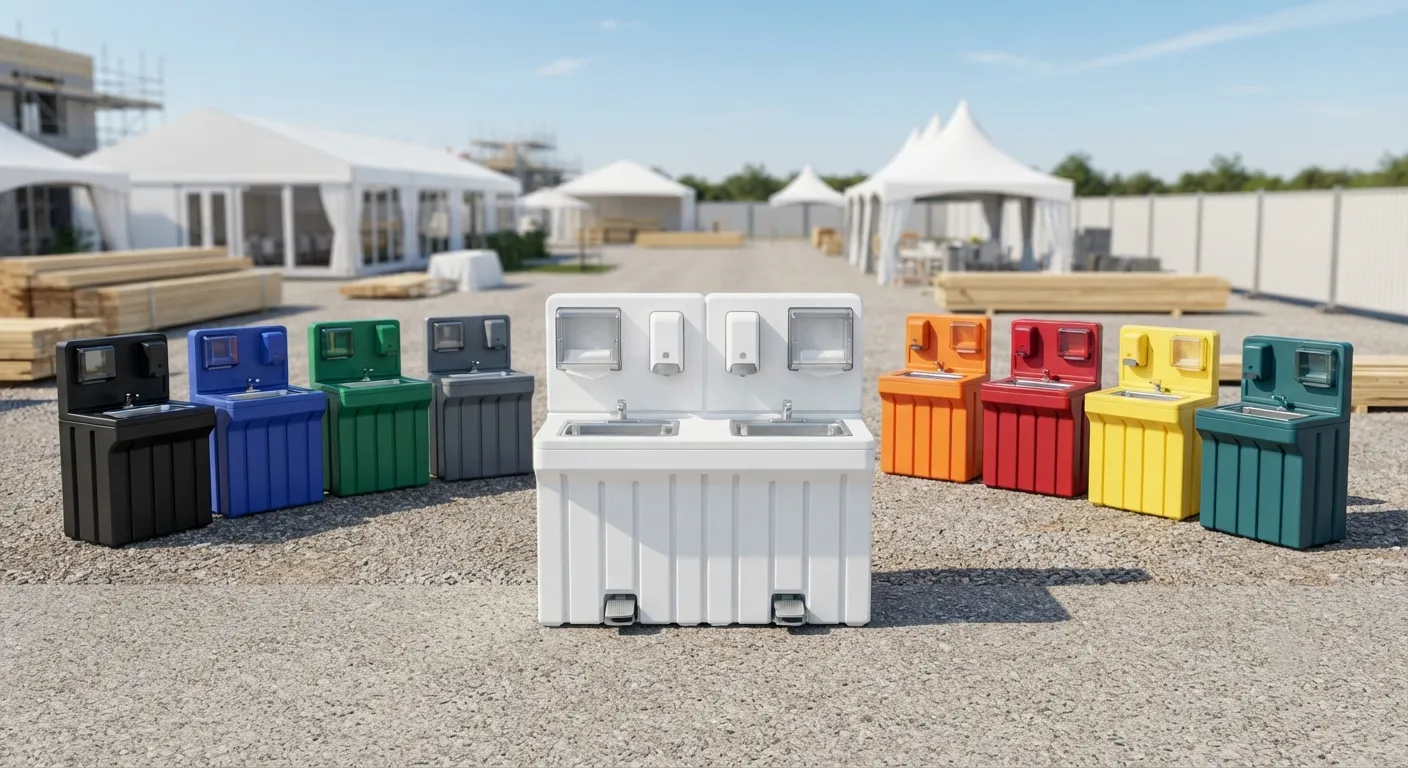
Water and washing go hand in hand with toilet placement. OSHA 1926.51(a)(1) requires potable water at every place of employment, and if your crew is applying paints, coatings, herbicides or insecticides, OSHA 1926.51(f)(1) requires washing facilities for that contaminant exposure specifically, not as a general handwashing rule. Pair your toilets with a handwashing station rental or a portable sink rental, and note that 29 CFR 1910.141(d)(2) requires soap and a towel or hand drying device, since sanitizer alone doesn't satisfy it. If you're running an Ozark River portable sink and need a replacement part, ask your rental company directly, since spec sheets vary by model year. Storage and office needs stack onto the same lot plan: a storage container rental or mobile office trailer rental needs its own pad, and if a mobile office trailer needs replacement doors, that's a manufacturer part order, not a placement issue. Septic support matters too. A residential tank is typically pumped every 3 to 5 years depending on size and household count, and a grease interceptor gets pumped once solids reach 25 percent of liquid depth. Fontana Porta Pros also fields calls asking whether a placerville septic pumping service can help with Fontana jobs; that city sits well outside our service radius, so stick with a local provider like septic pumping service for anything in Fontana proper.
How far from a building should a porta potty sit?
Keep it a few feet off doorways and windows, clear of dumpster loading zones and away from soft ground or drainage paths. There's no fixed distance in the OSHA rules cited here, so use sightlines, service truck access and neighbor complaints as your real guide.
Can I place a porta potty on the street in Fontana?
Placement in the public right of way needs confirming with the city before delivery. Keep the unit on private property whenever the lot allows it, since that avoids the permit question outlined for porta potty permit requirements entirely.
Do ADA units need extra clearance?
Yes. ADA Standards section 304.3.1 requires a 60 inch turning circle, and section 404.2.3 sets a 32 inch minimum door width. Plan the ADA unit's pad before laying out the rest of your cluster, since it needs more room than a standard unit.
How close together can units be clustered?
Leave at least 36 inches of clear route between units per ADA Standards section 403.5.1. For large clusters, remember the 5 percent accessible-unit minimum under ADA Standards section 213.2 before finalizing your layout.
Who do I call to plan placement for a Fontana job?
Fontana Porta Pros walks the site plan with you before delivery. Reach out through request a quote or contact, and check service areas if your job sits near Jurupa Valley or Colton.
Next step
Get a delivery date
Tell us the address, the dates and the headcount. We size the order and confirm the route.